
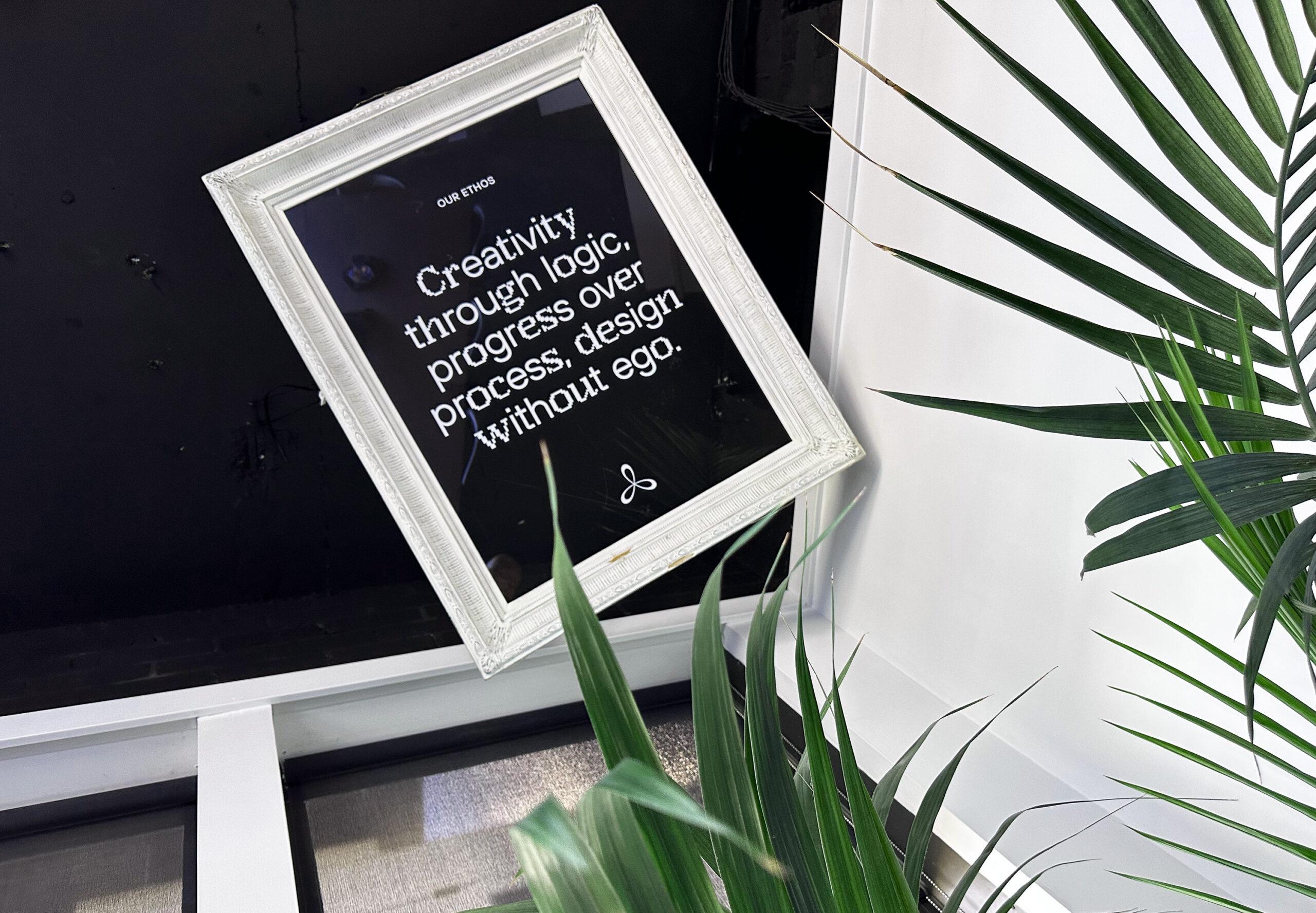
What sets SLICK apart from other agencies?
There are plenty of creative agencies that can design a logo, build a website or…

|

When people think about branding, they often think first about the visual elements — a logo, colours, typography and imagery.
But before any of those decisions are made, there is a more fundamental question to answer: what should your brand actually stand for?
That’s where brand strategy comes in.
Brand strategy creates the foundation for how an organisation positions itself, communicates and presents itself to the world. It connects what the business is trying to achieve with what its customers need to understand, feel and remember about it.
Put simply, it’s the thinking that should happen before the designing begins.
Your logo is an important part of your brand, but it isn’t your brand.
A brand is formed through a much broader collection of experiences and perceptions. It’s what people associate with your organisation, what differentiates you from competitors and, ultimately, why someone might choose you.
Brand strategy helps define those things before they become visual.
It considers where the organisation is today, where it wants to go, who it needs to connect with and how it should position itself to get there.
Once that direction is clear, design has something meaningful to communicate.
Every organisation is different, so there isn’t a single formula for developing a brand strategy.
Typically, the process begins with discovery — understanding the business, its objectives, customers, competitors and existing market position.
From there, a strategy may explore areas such as audience, positioning, points of difference, brand personality, messaging and tone of voice.
Importantly, these shouldn’t be treated as separate exercises. They need to work together to create a clear idea of what the brand represents and how it should communicate.
The outcome isn’t simply a document. It’s a framework for making better and more consistent decisions about the brand.
It’s tempting to start a branding project by exploring logos, colours and visual styles. They’re tangible, exciting and easy to react to.
But without strategic direction, those decisions can quickly become subjective.
Do we like this colour? Does the logo feel modern enough? Should the typography be bolder?
Brand strategy changes the conversation.
Instead of asking whether we personally like something, we can ask whether it’s appropriate for the audience, supports the desired positioning and communicates the right characteristics.
Design still requires creativity, but that creativity now has a purpose.
As organisations grow, their brands naturally become more complicated.
Different people create presentations, website content, campaigns, social media, proposals, advertising and other communications. Without a shared understanding of the brand, inconsistency can quickly creep in.
A clear strategy provides a common reference point.
It helps everyone understand what the organisation stands for, how it should speak and what it should prioritise when communicating with its audience.
That doesn’t mean every piece of communication needs to look or sound identical. It means everything should feel like it comes from the same organisation.
Brand strategy isn’t only for new businesses.
An established organisation may have a strong reputation and recognisable identity but find that its brand no longer reflects where the business is heading.
Perhaps the audience has changed. New competitors have entered the market. Services have evolved. The organisation has grown, merged or moved into new sectors. Or the brand simply hasn’t kept pace with the business behind it.
These are all good reasons to revisit the strategy.
In some cases, the result may be an entirely new identity. In others, the existing brand may simply need clearer positioning, messaging or refinement.
The strategy helps determine how much change is actually necessary.
Good branding shouldn’t begin with deciding what something should look like.
It should begin by understanding what the organisation needs to achieve.
Brand strategy provides that direction. It turns business objectives, audience insights and ideas into a clear foundation that designers, writers, marketers and internal teams can work from.
The visual identity can then do what it is supposed to do — express that strategy in a distinctive and memorable way.
Because when the thinking is right, the design doesn’t just look good.
It means something.
Continue reading from our journal. View Journal Archive
There are plenty of creative agencies that can design a logo, build a website or…

Discovering that your website has been hacked can be confronting, particularly when your website plays…
●
Choosing the right creative partner is about more than finding someone who can produce great-looking…